
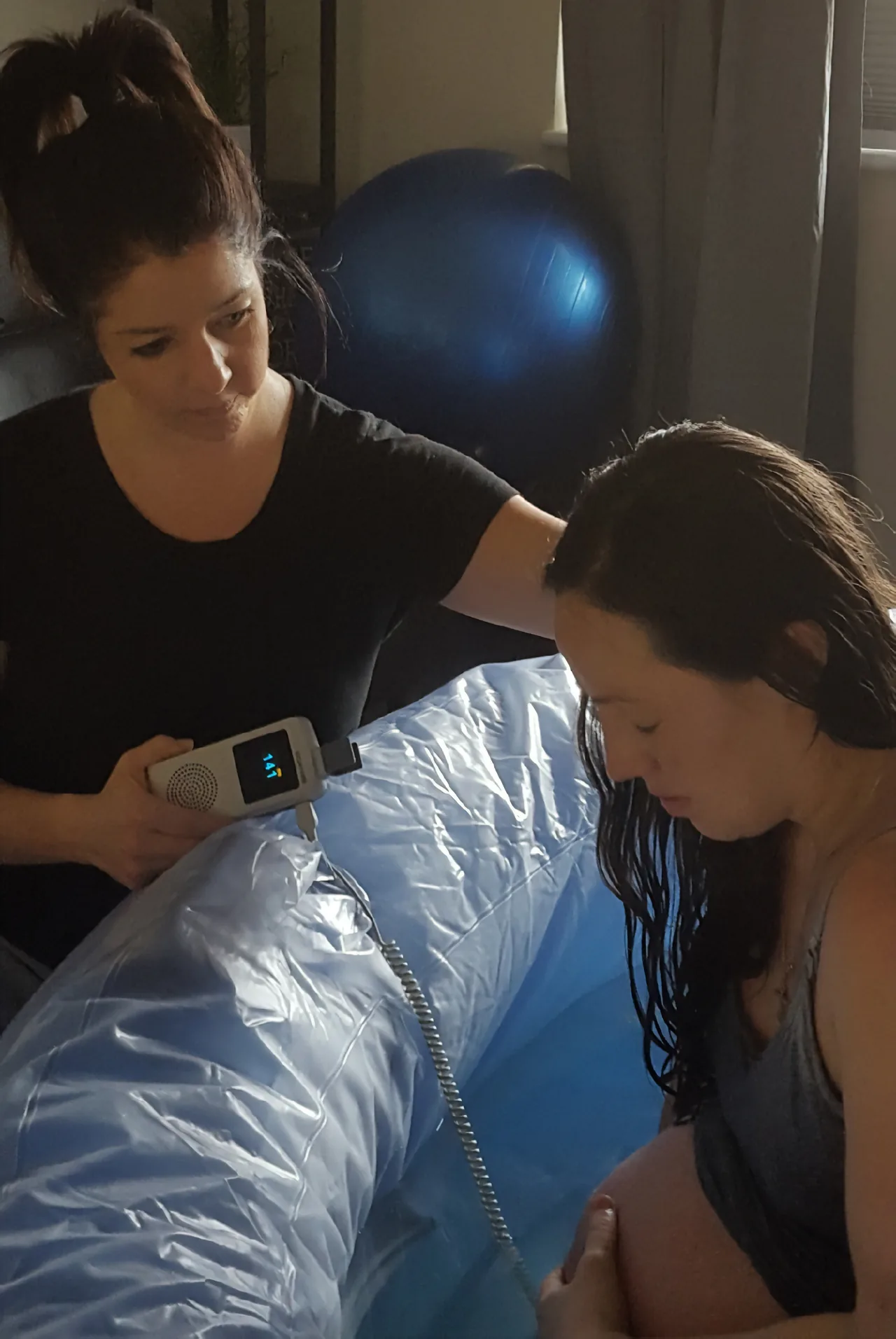
What ultrasound is
- Ultrasound uses high-frequency sound waves to create images. It does not use ionizing radiation.
- Julia does not perform ultrasound. When imaging is chosen or clinically indicated, she refers you to an appropriately trained provider.
Why it may be offered
- Estimate gestational age and due date, especially when dates are uncertain.
- Confirm the number of fetuses and assess location, anatomy, growth, fetal position, placental location, and amniotic fluid.
- Evaluate a specific symptom or clinical finding, or support monitoring later in pregnancy when additional information may change care.
Benefits and limits
- Ultrasound can provide information that supports planning and informed decisions, but it cannot identify every condition or guarantee a particular outcome.
- Results sometimes lead to additional imaging, consultation, or uncertainty. Ask how a finding would change your options before the exam.
Safety and prudent use
- Diagnostic ultrasound has a long safety record when used prudently by trained professionals.
- Ultrasound energy can produce small thermal or mechanical effects, so professional organizations recommend medically appropriate use and discourage extra exposure solely for non-medical keepsake imaging.
- Discuss the reason, expected information, alternatives, and how results will be used in your care plan.